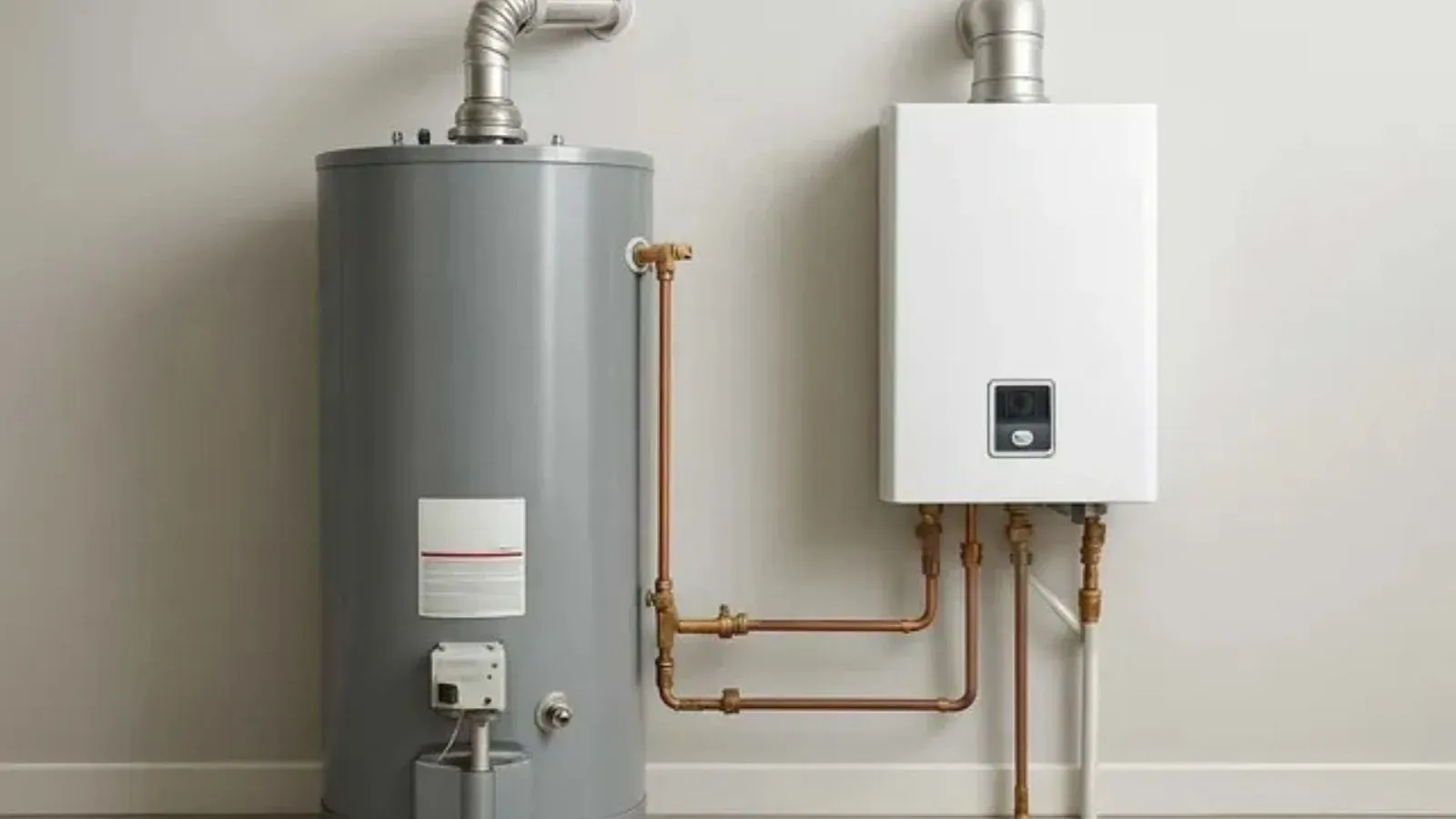
Water Heater Installation in American Canyon, CA
Choose the right size, fuel and setup now, while there is time to get it right and no puddle on the floor.
Most people meet water heater installation in a hurry. You may be planning ahead instead. Maybe a new build needs one, a remodel is moving the closet, or you want to swap an aging tank before it fails.
Water heater installation in American Canyon, CA means selecting a unit, connecting water and fuel or power, venting, bracing and testing it. Our line is staffed 24/7, but planned installs are best booked at a time that suits you.
A good install starts well before the plumber arrives, with decisions about size, fuel and location. This page walks through those choices, the basics of venting and gas supply, and the code points that homeowners should know exist.
Decide the size before the brand
Capacity is the choice people most often get wrong. A tank that is too small runs out when two showers overlap, and a tank that is too large keeps extra water warm all day for nothing. Think about how many people live in the house, how many bathrooms are in use at the same time and whether you run a dishwasher and washer in the morning.
Recovery rate matters as much as tank volume. It describes how fast the heater reheats once the hot water runs low, and it differs between gas and electric models. A gas unit generally recovers faster than an electric tank of the same size.
Physical space also limits the choice. Measure the height and width of the closet or garage corner, the clearance to walls and the path from the front door. A taller, narrower tank sometimes fits where a squat one does not.
Fuel choices and what each asks of your house
The fuel you choose decides what has to exist behind the wall before a heater can go in. Changing fuel is possible but adds lines, circuits or venting, while keeping the same fuel is the simpler path.
- Gas: needs a gas supply line, a shutoff valve at the unit, combustion air and an exhaust vent that rises and terminates correctly.
- Electric: needs a dedicated circuit of the right size and no venting, which makes placement more flexible.
- Heat pump (hybrid): needs an electric circuit, open air space around it, a condensate drain and room for service access. We make no claims about rebates, so check with your electric provider.
- Tankless: a different system with its own gas, venting and sizing rules, covered separately on the tankless water heater page.
Talk through water heater installation at your address. Call (855) 575-2890 and a licensed plumber can be dispatched.
(855) 575-2890Planning checklist before the install day
Walk through these items and have answers ready when you call.
| Item to settle | What to know | Who usually decides |
|---|---|---|
| Tank capacity | Household size, bathrooms, simultaneous use | You, with the plumber's advice |
| Fuel type | Existing gas line or circuit, or willingness to add one | You, based on what is in the wall |
| Location | Garage, closet or utility space, plus clearances | The plumber, based on code and access |
| Venting route | Existing flue or a new one, if gas | The plumber, who verifies the route |
| Permit | Rules vary, so ask the City of American Canyon building division | You and the building division |
| Old unit | Ask who removes it and what the written price includes | Confirm when booking |
Bring the model number of any existing heater to the call, since it speeds up everything.
Venting and gas line basics every owner should recognize
A gas water heater burns fuel, and the exhaust has to leave the building. The flue must slope, seal at its joints and end at an approved termination. A poor flue can let carbon monoxide into the house, which is why this is work for a licensed plumber and not a weekend project.
The gas line is the other half. Its size has to match the heater's input, the shutoff valve should be within reach, and every joint is tested for leaks before the unit is used. If a plumber proposes to change the line size or route, ask them to explain why.
Combustion air matters too. A heater sealed inside a tight closet without a way to draw air can burn poorly. If you plan to enclose the heater during a remodel, mention it when you call so the plumber can plan the air supply.
If you ever smell gas near any appliance, leave the building, call 911 and then call PG&E, the gas utility for most of the North Bay, at 1-800-743-5000.
Expansion tanks and relief valves in plain language
When water heats, it expands. In a closed plumbing system that has nowhere to go, pressure rises. A thermal expansion tank is a small tank with an air cushion that absorbs the extra volume, and some installations call for one.
Every tank heater also needs a temperature and pressure relief valve with a discharge pipe that runs safely downward. This is the safety device that opens if things go wrong. Whether your home needs an expansion tank depends on the plumbing setup, and the plumber will check your pressure to see.
How the strapping law shapes a proper install
California does not leave a water heater free-standing. Health and Safety Code section 19211 says new and replacement heaters, along with existing residential ones, must be braced, anchored or strapped according to the California Plumbing Code, and preengineered kits exist for tanks up to 120 gallons.
In practice, that means the wall or framing behind the unit needs to be able to hold the straps, so tell the plumber about any remodeled or unusual walls ahead of time. The newest edition, the 2025 California Plumbing Code, took effect on January 1, 2026. An installer who skips bracing has not finished the job, so check that it is on your written price.
From the first call to the first hot shower
Talk it through
You describe the home, the current heater and what you want, and the dispatcher books the visit.
Site check
The plumber looks at space, venting, gas or power supply and the plumbing connections, then explains the plan.
Clear price
You get the price in writing before work starts, with each major item named.
Install
The unit is set, connected, vented, braced and fitted with its relief protection.
Test and handover
The system is filled, started and checked for leaks, and you are shown the shutoff valves and settings.
Permit questions belong with the city building division
Permit rules vary, so ask the City of American Canyon building division before you schedule a swap or a relocation. City Hall is at 4381 Broadway, Suite 201, and the main city line is (707) 647-4360. A quick call can tell you whether your specific job needs a permit and an inspection.
That is worth settling early, because a permit requirement can affect scheduling, and a job done without a required permit can cause trouble when you sell. Neighbors across the line in Fairfield deal with a different city, so rules there are not the same. For work in either place, ask the local building office rather than relying on a neighbor's experience.
What affects the price of an installation
A planned install has the most room for choice, which is also why prices vary widely.
Standard tank, higher-efficiency tank, heat pump and tankless models sit at very different price points.
Moving from one fuel to another requires new gas lines, circuits or venting, which adds labor and materials.
Moving the heater, or installing in a tight space, takes more time than putting it in the same spot.
Bracing, relief valve piping, an expansion tank and proper shutoff valves are part of a correct install.
If your job requires a permit, there will be fees and scheduling to account for.
Insurance does not usually pay for a planned upgrade or for replacing a heater that simply wore out. It may respond to sudden water damage if a tank fails during or after an installation, so ask your insurer how your policy works and photograph the work.
To get a clear price before work starts for your own setup, call (855) 575-2890 and describe what you have in mind.
Water Heater Installation questions from American Canyon homeowners
Start with the number of people and how many use hot water at the same time, especially in the morning. Larger households with several bathrooms need more capacity or a faster recovery rate. The plumber can match the size to your pattern, and an oversized tank wastes energy keeping water hot that nobody uses.
Permit rules vary, so ask the City of American Canyon building division. We do not guess about which jobs are exempt, because a wrong answer could cost you at sale or inspection time. City Hall is at 4381 Broadway, Suite 201, and the main line is (707) 647-4360. Ask about your exact job.
Often yes, but relocation means new water lines, and for gas units possibly a new gas line and flue route. Electric units are more flexible. Tell the dispatcher where you would like it and why, and the plumber will check whether the new spot works for venting, access and bracing before quoting.
It is a small tank that absorbs the extra volume created when water heats in a closed plumbing system. Some homes need one and some do not, depending on the pressure and whether the system is closed. The plumber can check pressure during the visit and tell you whether adding one makes sense for your house.
Yes. California Health and Safety Code section 19211 requires braced, anchored or strapped water heaters under the California Plumbing Code, including new installs. We list bracing on the written price so you can see it. Ask the plumber to point out the straps before they leave, and tell them if the wall behind the unit is unusual.
Planned replacement is often easier than an emergency swap, because you choose the model and the time. If your heater is old, rusting or has needed repeat repairs, see water heater replacement for how to judge, or water heater repair if you only suspect a failed part.
Ready to talk through water heater installation at your home?
(855) 575-2890Water Heater Installation. Source note: California Health and Safety Code section 19211 requires water heaters to be braced, anchored or strapped against earthquake motion. Plumbing work follows the California Plumbing Code (Title 24, Part 5), the state standard for plumbing.