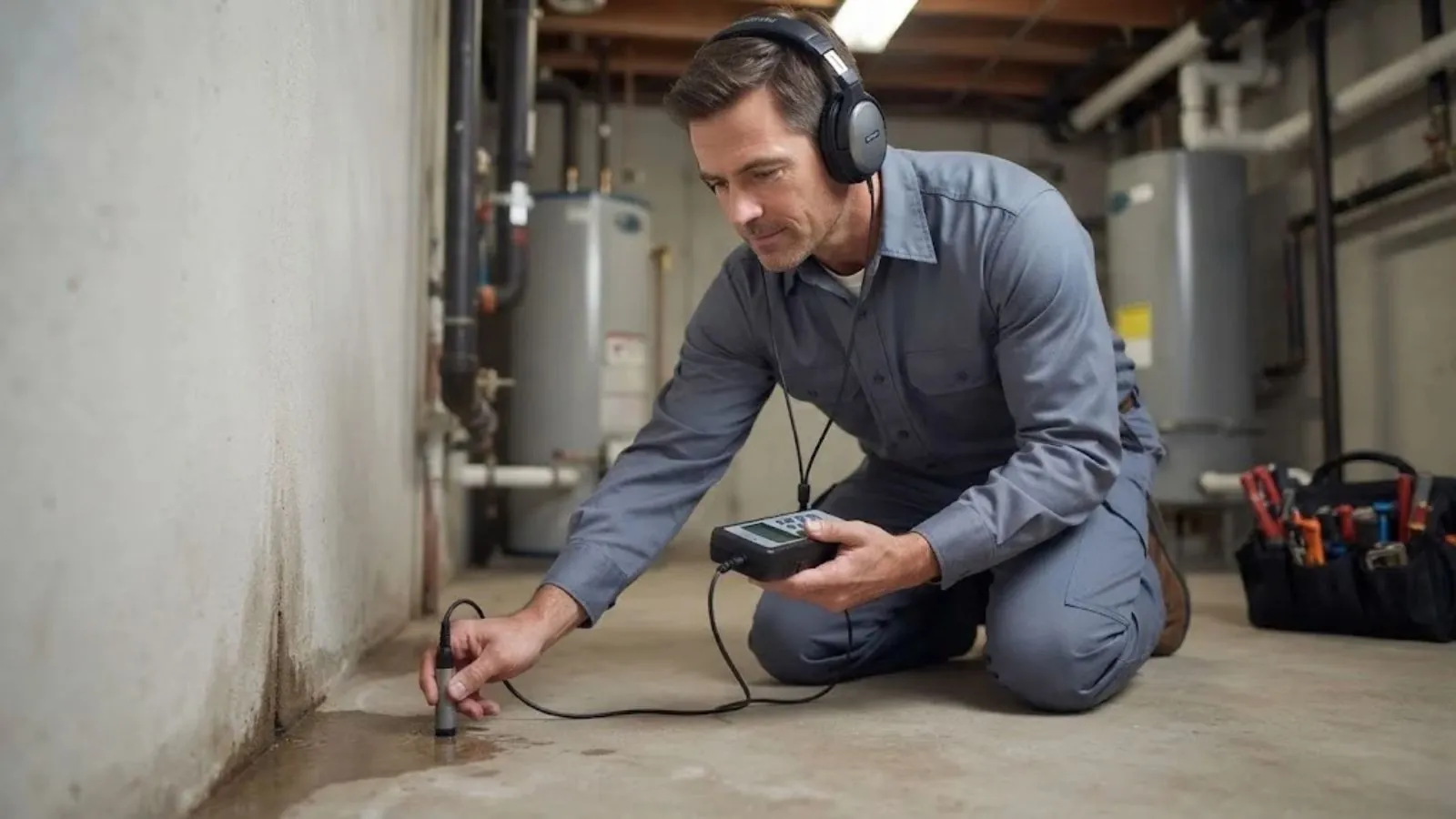
Emergency Leak Detection in American Canyon, CA
Find where hidden water is coming from before it ruins drywall, flooring, or your next water bill, with a licensed plumber on call at any hour.
Leak detection in American Canyon, CA is the work of locating a water leak you cannot see, so the repair opens one small spot instead of a whole wall, floor, or yard. Maybe the meter turns with every tap shut, or a ceiling stain is spreading.
Our 24/7 emergency dispatch sends a licensed and insured plumber who tests the system, narrows the leak to a marked spot, and explains the repair. You get a clear price before work starts.
If water is spraying or pooling right now, close the main valve first and read the urgent steps below. If it is a slow mystery, the meter test further down takes about fifteen minutes, and what you learn from it helps the plumber find the leak faster. Call (855) 575-2890 at any hour.
Something is wet and nobody can tell where the water is coming from
A stain grows on the ceiling, but the pipe above it looks dry. The water bill jumps though nobody changed their habits. One spot on the floor feels damp, or a faint hiss runs through the house at night when everything is quiet. Each of these says water is escaping somewhere out of sight.
Plumbers call the job of finding that spot leak detection. It uses instruments that listen to pipes, read heat, test pressure, or trace gas, so the opening you cut afterward is small and aimed. Finding a leak and fixing it are separate tasks, though one visit can often cover both.
Water also travels. It can follow a pipe, a joist, or a slab edge for several feet before it shows itself, which means the wet spot is frequently not the leak. That single fact is why guessing with a hammer and a drywall saw gets expensive.
Water is spraying, pooling, or coming through a ceiling right now
Stop the water and protect what you can, then call (855) 575-2890. Our line answers 24/7, including nights and weekends. If a pipe has split open, the page on burst pipe repair covers that situation in more detail.
- Close the main shutoff valve, usually where the line enters the house or near the meter box, by turning it clockwise until it stops.
- Switch off power to a wet room at the breaker panel only if you can reach it without standing in water. If water is near outlets or a light fixture, stay out and call.
- Open a faucet at the lowest point of the house to relieve pressure, then move rugs, boxes, and electronics out of the wet area.
- Keep people out from under a ceiling that is bulging or dripping heavily, since a full ceiling can come down at once.
- Photograph the damage and the meter reading before cleanup, in case you file an insurance claim.
- If you smell gas at any point, leave the building and call 911, then PG&E, the gas utility for most of the North Bay, at 1-800-743-5000.
Talk through leak detection at your address. Call (855) 575-2890 and a licensed plumber can be dispatched.
(855) 575-2890The meter keeps turning and the bill keeps climbing
Here is a check that costs nothing. Close every tap, make sure the dishwasher, washing machine, and ice maker are idle, and pause any sprinkler timer. Then open the meter box and look at the small flow indicator or low-flow dial. If it moves while nothing is running, water is leaving the pipes somewhere.
Photograph the reading, wait an hour or two without using any water, and check again. A changed number confirms a leak. A steady number means the bill has another cause, such as a running toilet or heavier watering than you remembered.
To narrow the zone, close the main valve at the house and watch the meter again. If the dial still moves, the leak sits on the buried line between the meter and the house. If it stops, the water is escaping inside the house or at a fixture, and the plumber will test branch by branch.
A toilet is the most common silent culprit. Add a little food coloring to the tank, wait fifteen minutes without flushing, and see whether color reaches the bowl. If it does, the flapper is leaking and the fix may be small.
A constant leak at the meter itself, or a dial that spins hard, should also be reported to the City of American Canyon leak line at (707) 647-4364. Make that call and ours, and ask the city where its responsibility ends and yours begins, because that boundary decides who pays for what.
Where the water is likely going, based on what you notice
Use this as a starting guide, since a plumber confirms the source with testing and not by symptom alone.
| What you notice | Likely source | What the plumber does |
|---|---|---|
| Meter moves with everything off | Buried line or a hidden leak inside | Closes valves in stages, then listens along the line |
| Brown ceiling stain | Pipe above, or a roof or vent leak | Scans for moisture and heat, traces upward |
| Warm or damp spot on the floor | Hot line under the floor | Listens at the floor, then pressure tests |
| Soggy lawn in dry weather | Buried supply line or irrigation | Pressure tests, then pinpoints by sound |
| Musty smell, no visible water | Wall cavity or crawlspace pipe | Reads moisture and looks in with a camera |
A single symptom can have two sources at once, so testing every zone matters.
A stain on the ceiling or a damp wall with no dripping pipe in sight
A ceiling stain usually sits below the leak, but not always directly below. Water runs along framing before it drips, so the real source may be several feet away, on another floor, or at a roof penetration instead of a pipe. A useful first question is whether the stain grows only after rain, after showers, or all day long, because each answer points somewhere different.
Inside walls, a moisture meter reads dampness through drywall without cutting it, and a thermal camera shows cooler or warmer patches where water has spread. Neither one replaces a pressure test, which shows whether the supply lines are holding. When the readings agree, the plumber opens one small inspection hole instead of a long cut.
Hold off on painting over a stain. Fresh paint hides the evidence, and a wall that stays wet can grow mold. We do not diagnose mold or health effects, so if you see or smell growth, have a mold specialist look at it once the water has been stopped.
Water under the house, a damp crawlspace, or a floor that feels soft
A house with a raised foundation has a crawlspace, and that space hides supply lines, drains, and the underside of the floor. A leak there can run for months because it drips into soil and not onto your belongings. Telltale signs are a musty smell, a spongy section of flooring, pests, or a bill that rose without a reason.
Detection starts with the pipes a person can reach and a pressure test of the supply side. A house built on a concrete slab is a different case, and our page on slab leak repair covers it. In a tight crawlspace the plumber may crawl in with a light and a moisture meter instead of relying on instruments alone.
Do not enter a crawlspace with standing water, exposed wiring, or a gas line nearby. Call and describe what you can see from the access door.
Who to call in American Canyon when the leak might be the city's
The City of American Canyon treats and distributes your water, and it takes leak reports at (707) 647-4364. After hours, on weekends, and on holidays, the city lists a different line, (707) 995-8674. If the meter test shows the dial moving even with your house valve closed, report it to the city and call us too, since the city looks at its side while a plumber checks yours.
A small number of addresses in American Canyon are served by the City of Vallejo's system, according to Vallejo's own water report. Look at your water bill to see which utility sends it, because that tells you which one should get the leak report.
A leak somewhere in the buried line between the meter and the house
The service line is underground, so a leak shows up as a wet patch, a dip in the lawn, the sound of running water near the meter, or a drop in pressure. A meter that runs with the house isolated points here. Soil and depth change where water surfaces, so a wet area can sit well away from the actual break.
Acoustic listening picks up the sound of water escaping under pressure, and a ground microphone narrows the point along the pipe. A tracer gas blend can find leaks in plastic pipe where sound is faint. The result is a mark on the surface, so the dig that follows is short.
What happens next depends on the pipe. A single break may allow a spot repair, while old or repeatedly failing line may be worth replacing, which our page on water line repair and replacement explains.
What the equipment does, in plain terms
No single tool finds every leak, so a plumber chooses by pipe material, location, and symptom. The brand on the case matters less than matching the method to the problem, and most jobs combine two or three of these.
A thermal image that agrees with a pressure test is far more convincing than either alone.
- Acoustic listening: microphones pick up the hiss or vibration of pressurized water escaping.
- Thermal imaging: a camera shows temperature differences, useful for hot lines and wet insulation.
- Tracer gas: a small amount of gas is pushed into an emptied line and detected where it rises.
- Pressure testing: sections of pipe are isolated and watched for a drop, which confirms and narrows a leak.
- Moisture meters and cameras: they read dampness in materials and look inside cavities through small openings.
How a leak hunt usually unfolds
Questions and meter check
The plumber asks where and when you notice water, reads your meter, and tests whether it moves with everything off.
Isolate the zone
Valves are closed in stages so the leak can be placed on the supply side, a branch line, or the drain side.
Pinpoint the spot
Listening gear, thermal imaging, tracer gas, or a pressure test marks the location on the surface.
Explain before opening anything
You hear what was found, what repair options exist, and a clear price before work starts.
Sprinklers, meter boxes, attics, pools, and the yard
Irrigation systems leak at valves, fittings, and buried lines, and a stuck zone valve can run all night. The giveaway is a high bill during watering season or a soggy bed near one head. Shutting off the irrigation supply and rechecking the meter separates a sprinkler leak from a house leak.
A wet meter box or a puddle beside the meter can come from the fitting at the meter or from the line next to it. Leave the meter itself alone, since forcing it can turn a small leak into a large one, and call the city leak line at (707) 647-4364 to report it.
Attic leaks come from supply lines, a water heater overflow line, or an air conditioner drain, and they are easy to mistake for roof leaks. Check whether the stain appears only on rainy days before you call a roofer.
Pool and spa supply lines are a smaller part of this work. If you have one and the water level keeps dropping beyond normal evaporation, mention it when you call and we will say honestly what can be tested.
Leaks at a shop, office, or other business
Commercial buildings have larger systems, longer pipe runs, and landlord and tenant questions that change how detection is planned. Our commercial plumbing page covers that work, and a quick call describing the building is the best way to start, since the residential steps above may not apply as written.
What shapes the cost of finding a leak
Detection is priced by the effort needed to locate the leak, and several things change that effort.
A suspected line under a driveway needs different gear and more time than a stain on one interior wall.
Some leaks give up after a pressure test, while others need listening, thermal imaging, and tracer gas together.
Tight crawlspaces, finished ceilings, and a meter box that is hard to open all add time.
Plastic, copper, and old steel pipe carry sound and heat differently, which affects which tools work.
Detection finds the spot. Opening, repairing, patching drywall, or digging is a separate piece of work, priced once you know the plan.
Policies differ. Many homeowner policies cover sudden and accidental water damage but not slow leaks or worn-out pipes, and some will pay for finding a leak while others will not. Ask your insurer before work begins, and photograph the damage and the meter reading before any cleanup.
Call (855) 575-2890 to hear what applies to your home, with a clear price before work starts.
Leak Detection questions from American Canyon homeowners
Yes. Our dispatch line at (855) 575-2890 answers 24/7, so a spraying pipe at midnight or a wet ceiling on a Sunday gets a licensed plumber sent to you. Close the main valve first, switch off power to wet rooms only if it is safe, and keep the meter reading photographed for later.
Water is going somewhere. Check toilets with food coloring and pause any sprinkler timer, then close the main valve at the house and watch the dial again. If it still moves, the leak is on the buried line before the house. If it stops, the leak is inside, and a plumber can test branch by branch to find it.
The meter helps. A dial that keeps moving after you close the house valve points to the buried line in the yard. A dial that stops points to the house. Damp floors, a musty smell, or a soft patch of flooring suggest the crawlspace or foundation. Confirming it takes pressure testing and listening gear.
Not as a first step. Moisture readings, thermal imaging, and pressure tests usually place the leak well enough that one small opening does the job. Cutting happens after the spot is marked, and you hear the plan and a clear price before work starts.
Yes. Detection finds and marks the source, and repair stops it. Many visits include both, but the repair is priced after the plumber knows whether it is a fitting, a short section of pipe, or a longer run. See repiping if the pipe is failing in many places.
Report it to the City of American Canyon leak line at (707) 647-4364, and call us if you also want the house side tested. Ask the city where its responsibility ends and yours begins. If your bill comes from the City of Vallejo instead, contact Vallejo Water. We also dispatch to homes in Vallejo when a house-side test is needed.
Sprinkler leaks are a normal part of detection work, usually found by shutting zones off one at a time and rechecking the meter. Pool and spa lines are a smaller part of the work, so mention yours when you call and we will say what can be tested at your address.
Ready to talk through leak detection at your home?
(855) 575-2890Leak Detection. Source note: hardness and disinfectant figures come from the City of American Canyon 2023 annual water quality report. Plumbing work follows the California Plumbing Code (Title 24, Part 5), the state standard for plumbing.