Why does my toilet keep clogging in American Canyon, CA?
A toilet that clogs again and again usually points to one of four causes.
A toilet that clogs once is an annoyance. A toilet that clogs every week is telling you something. In most American Canyon homes the cause is one of four things: too much paper or the wrong kind, a partly blocked trap inside the fixture, a weak flush, or a blockage further down the drain line.
This guide helps you sort out which one you have. You will see what to try with a plunger, which signs mean the problem is bigger than the bowl, and how a plumber decides between a toilet repair and a line cleaning. If water is near the rim right now, jump to the shutoff steps.
Start with the pattern, not the plunger
Before you grab tools, think about when the clogs happen. A bowl that clogs only after heavy use points at the fixture or at what went into it. A bowl that clogs together with a slow shower or a gurgling sink points at the pipe behind the wall.
Try a quick test. Run the bathroom sink for a minute and watch the toilet bowl. If the water level in the bowl jumps, bubbles or sinks, air and water are fighting through a restricted line. A plunger will only buy a short break.
Note what you see over a week. A plumber can use that pattern.
Repeat clogs: what you see and what it usually means
Match your symptom to the likely cause before deciding how far to take the repair yourself.
| What you notice | Likely cause | What usually happens next |
|---|---|---|
| Clogs only with heavy paper use | Paper is too thick or you are flushing too much at once | Switch paper, flush in two rounds, and watch for improvement |
| Weak, lazy flush even when the bowl is clear | Mineral buildup in the rim holes or a worn flush valve | A repair of the tank parts or a careful cleaning of the rim |
| Slow drain after each flush, sometimes a gurgle | Partial blockage inside the toilet trap | A closet auger clears it, or the toilet is lifted for a full check |
| Toilet and tub or shower both slow | Blockage in the branch or main drain line | A drain cleaning with a cable machine from a cleanout or vent |
| Water backs up into the tub when you flush | Main line is restricted, often by roots or a belly in the pipe | Stop using water and have the line cleaned and inspected |
| Rocks or leaks at the base | Failed wax ring or loose bolts | Toilet is pulled and reset with a new ring |
A bowl that overflows with sewage-smelling water needs a professional, not another flush.
Not sure which case applies to your home? Call (855) 575-2890 and describe what you see.
(855) 575-2890How to plunge a stubborn bowl the right way
Use a flange plunger, the kind with a rubber lip that folds out of the cup. A flat cup plunger is meant for sinks and seals poorly on a toilet drain. Lay towels around the base first.
Seat the plunger so the flap sits inside the drain opening and the cup fills with water. Push down gently first to push out the air, then pump steadily for about 15 to 20 strokes. Pull up sharply on the last stroke. The suction on the pull often does more than the push.
If water drains in a smooth swirl, add a bucket of warm tap water to test the flow before you flush again. Never pour boiling water into porcelain, because it can crack.
When the bowl is rising: shutoff first
Stop flushing
Every extra flush adds water to a bowl that cannot drain.
Lift the tank lid
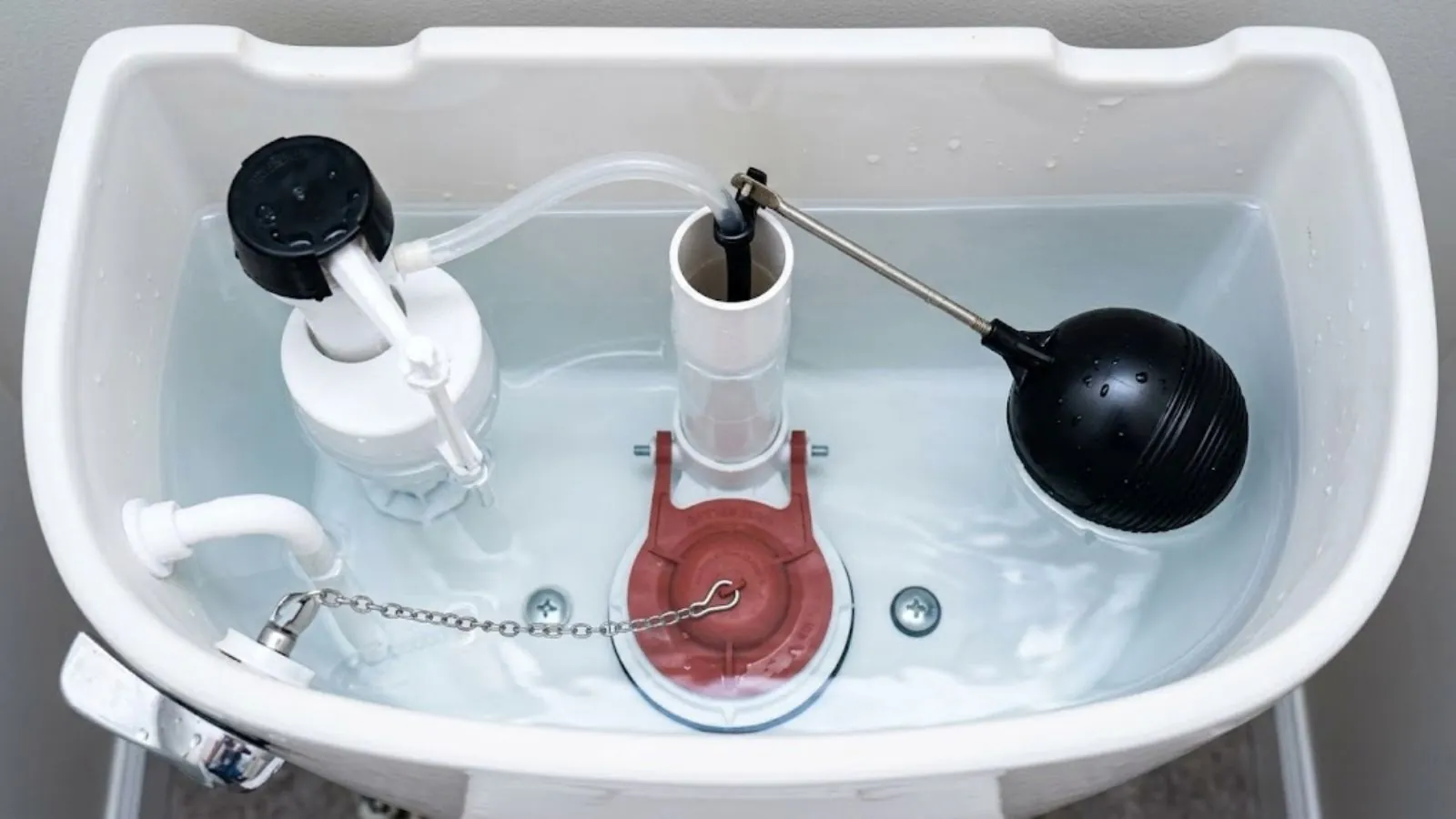
Hold the rubber flapper down if the bowl is near the rim so no more water refills.
Turn the stop valve
Find the valve on the wall or floor behind the toilet and turn it clockwise until it stops.
Bail out extra water
Use a cup and bucket to drop the level before you plunge so it does not slop over.
What a closet auger can and cannot do
A closet auger is a short cable with a bent guide made for toilets, and it protects the porcelain from scratches. Feed the tip into the drain, crank the handle and feel for resistance. A soft clog often breaks up.
Stop if the cable stops against something solid and will not turn. Forcing it can crack the bowl or push an object into a place where it is harder to reach. At that point the fixture usually has to come off the floor, which is a job for a plumber who handles toilet repair and reinstallation.
Signs the clog is in the line, not the toilet
A single toilet can be fixed on its own. Several fixtures acting up at once are a different story. If a floor drain, a tub or a laundry standpipe also gurgles after you flush, the shared drain is restricted somewhere past the toilet.
Roots, grease or a sagging stretch of pipe can narrow a drain until it clogs on a schedule. Professional drain cleaning uses a cable machine to cut through the blockage and restore the full diameter of the pipe.
If the backup shows up in the lowest fixture of the house first, think main line. That is when sewer line cleaning and a camera look at the pipe are worth asking about, because the same clog will return if the cause is a crushed or offset section.
Stop and call us if you see any of this
Do not keep working on the problem yourself if:
- Sewage-smelling water comes up in a tub or floor drain
- The bowl overflows more than once after you plunge
- Water seeps from the base of the toilet onto the floor
- A tool or object is stuck and the cable will not turn
- A chemical cleaner was already poured in
What shapes the price of a toilet clog fix
The final price depends on where the blockage sits and what it takes to reach it.
A bowl clog is a quick clearing. A branch line or main line needs a machine and more time on site.
If the toilet has to come off the floor to get at the blockage, the job includes the reset and a new wax ring.
A bad flapper, fill valve or flush valve is replaced as part of a repair, and parts differ by toilet model.
A midnight backup is handled through 24/7 emergency dispatch, and that can affect how the call is priced.
Policies differ. Many cover sudden and accidental damage, such as a backup that ruins flooring, but not a slow leak or a worn-out part. Photograph any water damage before cleanup and ask your insurer what applies to your home.
Call (855) 575-2890 for a clear price before work starts and the real number for your toilet.
American Canyon note: water, wipes and your lateral
The City of American Canyon reported an average total hardness of 92 ppm in its 2023 water quality report, with a range of 60 to 188 ppm. That is moderate water, about 5.4 grains per gallon.
Mineral crust can build in rim holes over time, but it is rarely the only reason a toilet clogs. Look at wipes and flushing habits before you blame the water, and test your tap to see where your address falls in that range.
If the culprit turns out to be the sewer lateral, section 14.12.090 of the American Canyon Municipal Code calls for a city permit before anyone installs, alters or repairs a public sewer, side sewer or building lateral. The code does not say who owns which stretch, so ask the city before you dig. Ask your plumber whether the job is a cleaning or a repair, because only repair work raises the permit question.
Source type: City of American Canyon 2023 water quality report, American Canyon Municipal Code Title 14.
Neighbors in Vallejo, Napa and Fairfield deal with the same clogs
We field the same calls from homeowners in Vallejo, from Napa residents and from households in Fairfield, and the checks above apply in each.
Water hardness differs between those cities, which can change how fast scale builds on the rim. Ask the utility that sends your bill for the figure in its annual report.
Common questions answered
That usually means the problem is not the paper. A narrow trap, a weak flush from mineral buildup, a worn flush valve or a restriction in the drain line can all do it. Try the sink test and plunge once. If it clogs again soon, a plumber should look at the toilet and the line behind it.
The label does not mean the wipe breaks down like paper. Most hold together in the trap and the drain line and are a leading cause of repeat clogs. The safest rule is to put wipes in the trash and keep only toilet paper in the bowl.
We recommend against it. Chemicals can sit in the bowl and burn skin if the water splashes, and they can damage some fixtures and pipes. If a chemical has already been poured in, tell the plumber before anyone plunges or augers the toilet.
Check other fixtures. If only one toilet clogs, the cause is probably in that fixture. If a tub, shower or second toilet is slow or gurgles when you flush, the problem is in the shared line. A drain cleaning visit handles that case.
Stop using it and shut off the stop valve. A rocking toilet often has a failed wax ring or loose bolts, and a slow leak can rot the subfloor. A plumber can reset the toilet properly. Do not try to caulk around the base as a fix.
Not by itself. The 2023 city report lists average hardness of 92 ppm, which is moderate. Scale can build up in the rim holes over time, but wipes, excess paper and drain restrictions are far more common causes of repeat clogs in homes here.
Want a plumber to look at it?
(855) 575-2890About this guide. Source note: plumbing work in California follows the California Plumbing Code (Title 24, Part 5), the state standard. You can verify any contractor with the Contractors State License Board at cslb.ca.gov.