Emergency Toilet Repair in American Canyon, CA
A wet bathroom floor, a rocking bowl or a tank that never stops refilling all trace back to a few parts we can name quickly.
Toilet repair in American Canyon, CA starts with one question. Where exactly is the water, and is it still arriving? A toilet repair means fixing or replacing the parts that hold, fill, seal and flush a toilet, from the supply valve on the wall to the ring of wax under the bowl. If water is spreading on the floor, a licensed and insured plumber is available through our 24/7 emergency dispatch.
Until someone arrives, your job is to stop new water from entering the room. The steps in the urgent section below take about a minute and protect the floor, the ceiling underneath and the cabinet next to the bowl. The rest of this page walks through what a leak at each spot usually means.
Standing in the bathroom with a wet floor, what is leaking and where
Start by drying the floor with a towel, then watch where new water appears. Water that shows up only after a flush points to the seal under the bowl. Water that beads on the tank, the wall or the small pipe leading into the tank points to a supply connection or condensation. Water that keeps arriving with no one touching the toilet usually means a failing supply valve or a fill valve.
Touch the underside of the tank bolts and the nut on the supply line with a dry paper towel. A damp towel tells you which joint is weeping, and it gives the plumber a head start on the phone. Take a photo before you wipe things down, because it helps if you later need to show an insurer what happened.
- Puddle at the base after flushing, often with a bowl that rocks slightly
- Drips from the small line between the wall and the tank
- Water running down the outside of the tank or the bowl in warm, humid weather
- Soft, spongy flooring or discolored caulk around the base
What each wet spot usually means
Match what you see to the likely cause, then call and describe it.
| What you see | Likely cause | What a repair involves |
|---|---|---|
| Water at the base after each flush | Worn wax ring or loose closet bolts | Pull the toilet, replace the seal, check the flange, reset |
| Drip at the wall valve | Packing nut or stem seal failing | Tighten or replace the shutoff valve |
| Wet supply line near the tank | Cracked or loose connector | Replace the braided line |
| Tank constantly refilling | Fill valve or flapper not sealing | Swap the worn internal parts |
| Sweating tank, no drip at joints | Cold water meeting humid room air | Often no repair, sometimes a tank liner or mixing valve |
Several causes can overlap, so a leak that seems to stop after one fix may need a second look.
Talk through toilet repair and installation at your address. Call (855) 575-2890 and a licensed plumber can be dispatched.
(855) 575-2890Toilet overflowing or water spreading across the bathroom floor
Overflow water from a backed-up bowl is dirty, so keep children and pets out of the room. Water from a failed seal or a broken supply line is clean but can travel under flooring quickly. Either way, the next minute matters more than the next call.
- Turn the oval handle on the wall valve behind the toilet clockwise until it stops. If it will not turn, leave it alone and go to the main shutoff.
- If the valve does not help, close the main water valve for the house (see our faucet and valve page for how a stuck valve gets handled).
- Lift the tank lid and push the flapper down, or tie the float rod up, to stop an overflow from refilling.
- Towel off the floor and set a bucket under any drip. Open the vanity doors if the cabinet is wet.
- Photograph the damage, then call (855) 575-2890 and tell us which of the wet spots in the table above matches.
The wax ring, the flange and a toilet that moves
Every floor-mounted toilet sits on a flange, a ring fixed to the drain pipe. A wax or foam ring is squeezed between the flange and the bowl so waste water and sewer gas stay inside the pipe. When that seal fails, water leaks at the floor each time you flush, and the smell of sewer can show up in the room.
A rocking bowl is a warning even if the floor looks dry. Movement breaks the seal, and water can seep under vinyl or tile for weeks before anything shows. If the subfloor feels soft near the base, the flange or the wood below may need repair before a new toilet goes back on.
We also see leaks that look like seal failures but come from a drain pipe below the floor. In a house with a crawl space, a drip under the bathroom can come from the drain itself, which is a different repair and sometimes a job for drain cleaning and inspection.
A toilet that keeps running or refills by itself
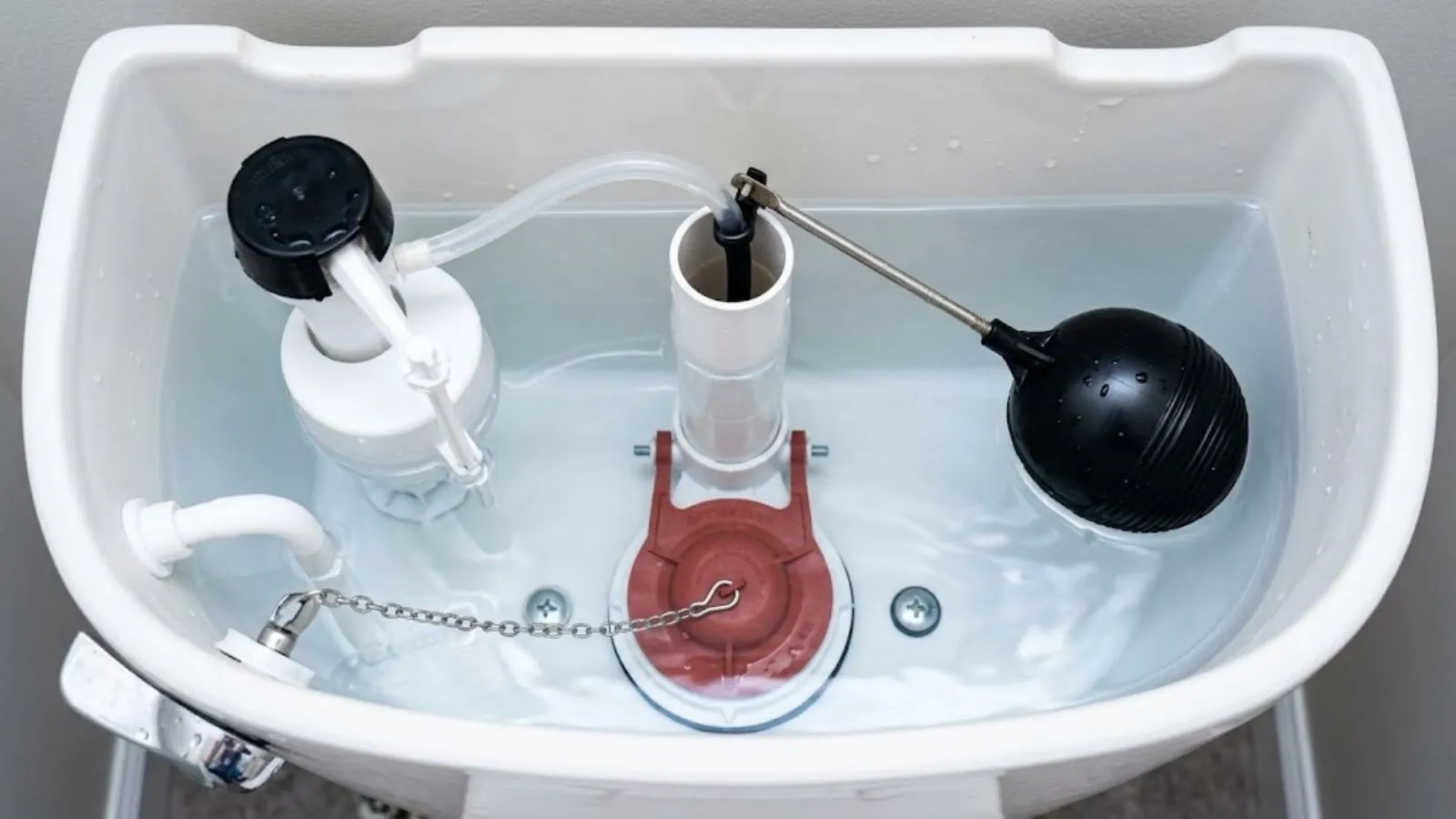
A running toilet wastes water around the clock and often makes a hissing or trickling sound at night. The cause is nearly always inside the tank. A flapper that no longer lies flat lets water leak into the bowl, and a fill valve that will not shut off keeps topping up the tank until the overflow tube carries the extra away.
A simple test is a few drops of food coloring in the tank. If color appears in the bowl without flushing, the flapper is leaking. If the water level sits at the top of the overflow tube, the fill valve needs adjusting or replacement. Replacing both together is normally cheaper than visiting twice.
Two bathrooms can behave differently even in the same house. A toilet in a seldom-used guest bath may run for months before the water bill shows it, so listen to every toilet in the house when it is quiet.
American Canyon water and the parts inside your toilet
The City of American Canyon's 2023 water quality report lists average total hardness at 92 ppm, with a range of 60 to 188 ppm. That is moderate, about 5.4 grains per gallon on average. Mineral scale builds slowly at that level. Flappers and fill valve seals therefore wear gradually, so replacing them at the first sign of a leak is usually enough. A whole-house treatment system is not a necessary part of the decision.
A few addresses in the city are served by Vallejo's system rather than the city's. Vallejo's report says its system serves a limited number of customers here (see our Vallejo coverage), so check your water bill before you compare your own water to those figures. If you see a neighbor's toilet repaired repeatedly, ask them which utility they use. Hardness differs between systems and affects how often you replace tank parts.
How a toilet replacement visit goes
Confirm the fit
The plumber checks the rough-in distance from the wall to the drain so the new bowl lines up and the lid clears the wall.
Remove the old toilet
Water is shut off, the tank is drained, and the bowl is lifted away. The flange and floor are inspected before anything new goes down.
Reset on a new seal
A new ring and bolts go on, the bowl is set level, and the supply line and shutoff valve are replaced if they are worn.
Test it under use
We flush repeatedly and check every joint for moisture. Caulk and cleanup finish the visit.
What affects the cost of toilet repair and installation
A cartridge swap and a full replacement with subfloor repair are very different jobs, so the price depends on what the floor and fittings turn out to need.
Replacing a flapper and fill valve involves small parts and little time. A new toilet adds the fixture itself, a new seal and the labor to remove and reset the old one.
A cracked or corroded flange has to be repaired before a toilet will seat properly. That adds parts and time.
If water has been reaching the wood for a while, the floor may need to be cut out and rebuilt, which can mean a second trade.
Old valves that will not close fully should be replaced with the toilet, since the new fixture depends on them.
Standard height, comfort height and water-saving models come at different prices, and some need different rough-in measurements.
Homeowner policies differ. Many cover sudden and accidental water damage, such as a supply line that bursts, but not slow leaks or parts that simply wore out. Ask your insurer before you start cleanup and photograph the damage first.
Call (855) 575-2890 for a clear price before work starts, based on what we learn about your bathroom.
Toilet Repair and Installation questions from American Canyon homeowners
Yes. A supply line that bursts at two in the morning cannot wait for business hours, so the phone line is answered around the clock and a licensed plumber is dispatched when the water cannot be stopped at the valve. Tell us where the water is coming from and whether the wall valve turned, and we will sort out the next step with you.
Most often the wax or foam ring under the bowl has stopped sealing, which leaks when you flush. Other causes include a loose closet bolt, a leaking supply line, a sweating tank or a drain problem below the floor. Dry the area, flush once and watch where the first drop appears. That detail tells us which repair you need.
It is not an emergency, but it is wasting water and the problem rarely corrects itself. A worn flapper or a fill valve that no longer shuts off is the usual reason. Both parts are inexpensive to replace compared with months of extra water use. Close the wall valve until the visit if the sound bothers you.
Often yes. A plunger or a closet auger clears most single-fixture blockages without disturbing the seal. If several fixtures back up or the toilet gurgles when another drain is used, the blockage is deeper in the line, and that work belongs with drain cleaning rather than toilet repair.
If it drips around the handle, feels stiff, or does not stop the water fully when closed, it should be replaced. Old valves can break when forced, so turn them gently. Replacing the valve when a toilet is installed is sensible, since it is the only thing between your bathroom and the house water supply.
Yes. We remove the old bowl, check the flange and floor, set the new one on a fresh seal and test it. If you are remodeling more than the toilet, the work may fit with other fixtures under plumbing installation, and we can plan it in one visit.
Permit rules vary, so ask the City of American Canyon building division before you start. A like-for-like swap is treated differently from moving a toilet or opening walls, and the division can tell you which applies. If we are doing the work, we will tell you what we find and what the city may require.
Ready to talk through toilet repair and installation at your home?
(855) 575-2890Toilet Repair and Installation. Source note: plumbing work in California follows the California Plumbing Code (Title 24, Part 5), the state standard. You can verify any contractor with the Contractors State License Board at cslb.ca.gov.