What Is Leak Detection and How Does It Work? A Guide for American Canyon Homeowners
Leak detection finds hidden water leaks without tearing out walls or floors.
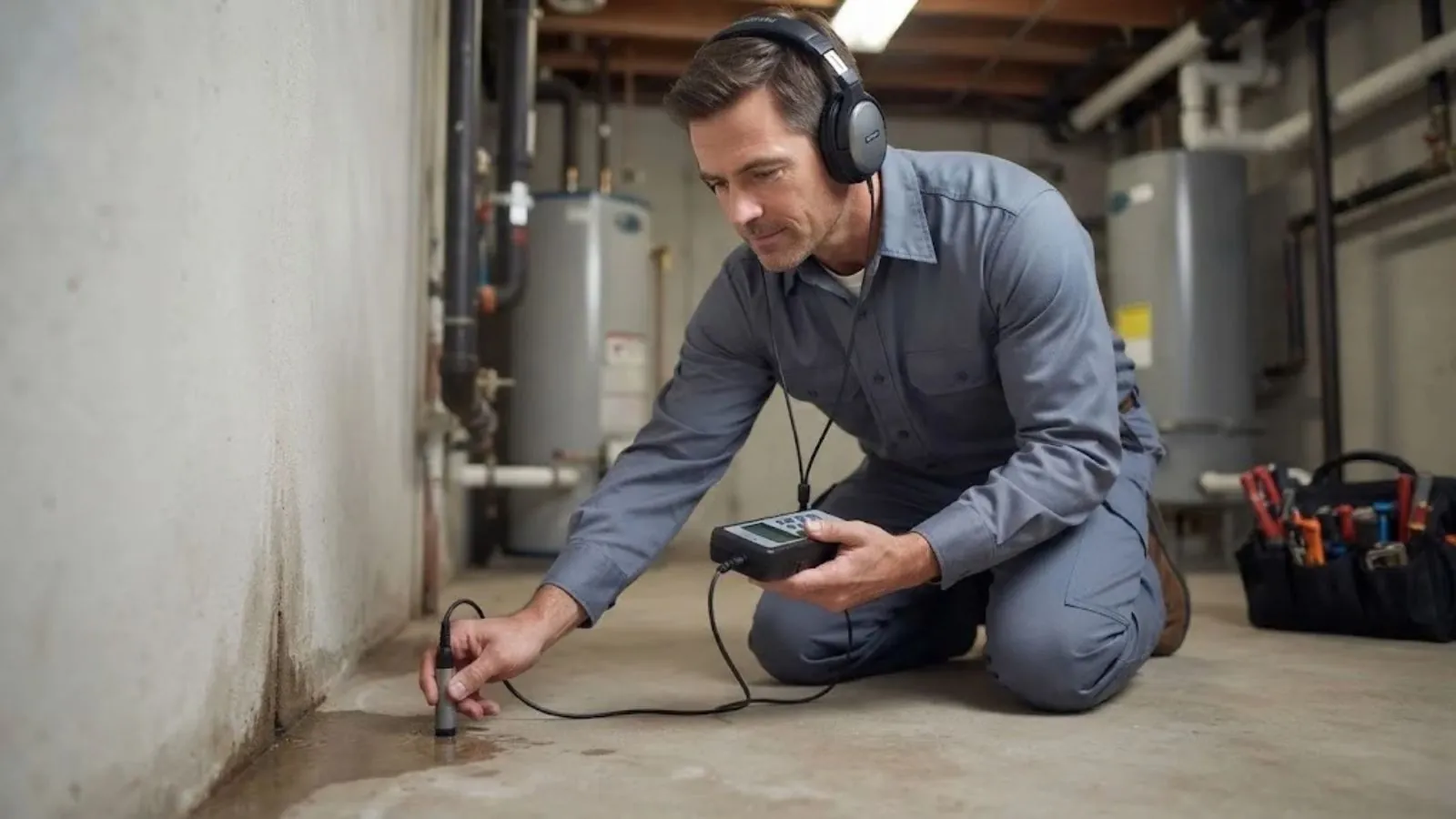
Leak detection is the use of listening gear, pressure tests, moisture sensing, and sometimes a thermal camera to find where water is escaping from a pipe you cannot see. The goal is to locate the leak within a small area so a repair opens up a patch of wall or floor, not a whole room. A plumber starts by confirming a leak exists, then narrows down where it is.
If your water bill climbed with no change in habits, or you hear water running when everything is off, this guide is for you. It explains the methods, a meter test you can do yourself, and when it is time for professional leak detection or, for a leak under concrete, slab leak repair.
The water bill went up and nobody changed anything
That is the most common way a hidden leak announces itself. The pipes look fine, the faucets do not drip, and yet usage keeps rising. Other hints include a warm patch on the floor, a musty smell in a cabinet, or the sound of a faint hiss at night.
Plumbers call the response to this situation leak detection. It is a method, not a single tool, and the right approach depends on whether the pipe is pressurized supply, a drain, or a line under a slab.
Try this before you call: the meter check
You can learn whether water is leaking with no tools beyond your eyes. Shut off every fixture inside and outside, including ice makers and irrigation. Then find your water meter and look at the small dial or low-flow indicator.
If it moves while nothing is running, water is going somewhere. If it holds still, the leak may be intermittent or only show when a fixture is on, and a plumber can test further.
- Make sure no one flushes a toilet or starts a dishwasher during the test.
- Take a photo of the meter, wait about an hour, and check again.
- A moving dial with all fixtures off suggests a leak somewhere past the meter.
- Do not pry open meter boxes. Only look through the lid, and call the utility if it is damaged.
Not sure which case applies to your home? Call (855) 575-2890 and describe what you see.
(855) 575-2890How plumbers actually find the leak
Acoustic listening is the most familiar method. A sensitive microphone picks up the hiss or vibration a pressurized leak makes in the pipe. The plumber moves along the floor or wall and marks where the sound is strongest.
Pressure testing isolates sections of the system. The plumber closes off part of the pipes and watches whether pressure drops. A drop means the leak lies in that section, which cuts down the search.
Thermal imaging reads surface temperature. A hot water line leaking under a floor can warm the area above it, and the camera shows that pattern. It supports the other methods but does not replace them, because damp spots from other causes can look alike.
What you notice, where the leak may be, and what comes next
This guide helps you describe the problem when you call.
| What you notice | Likely place | What happens next |
|---|---|---|
| Meter moves with everything off | Supply pipe, inside or outside the house | Pressure test and listening to narrow the section |
| Warm spot on a floor | Hot water line under a slab or floor | Listening and thermal checks, then a repair plan |
| Water bill up, no visible damp | Hidden line, toilet seal, or irrigation | Meter check, then isolate each branch |
| Damp wall or stained ceiling | Pipe in the wall or a fixture above | Moisture check, then open a small access hole |
| Soggy yard near the street side | Line between the meter and the house | Locate with listening, then excavate in one spot |
A table cannot diagnose your house. It only helps you describe the symptom clearly.
What a detection visit looks like
Talk through symptoms
The plumber asks about the bill, sounds, damp areas, and when you first noticed them.
Confirm the leak
A meter test or pressure test shows whether water is truly escaping and which side of the meter it is on.
Pinpoint the spot
Listening gear and moisture tools narrow the leak to a small area, which is marked.
Choose the repair
You get a clear price before work starts, and the plumber explains how much needs to be opened up.
What leak detection does not do
Detection finds a leak. It does not fix it. A separate repair follows, and a leak in a wall may mean drywall work afterward that a plumber does not handle.
It also cannot always find a leak the first time, particularly if it is tiny or only drips under certain pressure. We say so up front. If the first pass does not locate it, the next step is usually to test other sections, not to open walls at random.
Mold and health effects are outside what a plumber diagnoses. If you see mold or have health concerns, speak with a qualified specialist.
When it is under concrete
A slab leak is a leak in a pipe running below a concrete floor. Signs include a floor that feels warm, the sound of running water with fixtures off, and cracks that show moisture. Detection comes first, because breaking concrete in the wrong place is costly.
Neighbors in Vallejo and Napa call about the same symptoms, and the response is the same everywhere. Locate first, then choose between a spot repair, a reroute, or replacing the line.
Stop and call if you see any of these
Some situations are not for a meter check and a wait-and-see approach. Treat them as urgent.
If water is spraying, shut off the main valve at once. If a ceiling is bulging with water, keep clear of it and turn off power to that area at the breaker only if it is safe to reach. We dispatch a licensed plumber around the clock.
- Water coming through a ceiling or light fixture.
- Standing water around a gas appliance. Do not touch it.
- A smell of gas, which means leave, call 911, then PG&E.
- Bulging or sagging drywall.
American Canyon note: who to call about the city side
The City of American Canyon runs a water leak line at (707) 647-4364, and after hours, weekends, and holidays the number is (707) 995-8674. If the leak is on the street side of your meter, that is the number to use. Ask the city where its responsibility ends and yours begins, since that decides who arranges the repair.
The city may shut service down without notice in emergencies such as a main break, while planned repairs get at least 48 hours notice. If your water goes out suddenly, check with the city before you assume the problem is inside your house.
Source type: City of American Canyon water quality report and city website.
Common questions answered
The plumber listens for the sound of escaping water, checks moisture with a meter, and may use a thermal camera. Pressure tests narrow down the section. Once the area is marked, a small access hole is opened instead of a large demolition.
No. Detection locates the leak and repair fixes it. Some jobs are finished the same visit, while others need a second step such as replacing a section of pipe. Our slab leak repair page covers the repair side for leaks under concrete.
Turn everything off, read the meter, wait about an hour with no water use, and read it again. A change means water is moving. Do not forget outdoor taps, irrigation, and water softeners. If the dial is still, the leak may only show when a fixture runs.
Often most of the search is non-invasive, using listening and testing. A small opening is usually needed once the spot is found, to reach the pipe. The plumber explains the access plan and gives a clear price before work starts.
If water is actively flowing or spraying, yes. Close the main valve, then call us at (855) 575-2890. For a slow, unconfirmed leak, you may use the meter check first. Keep the main valve location in mind so anyone in the house can reach it quickly.
For a leak on the utility side of the meter, call the City of American Canyon leak line at (707) 647-4364, or (707) 995-8674 after hours, on weekends, and on holidays. If the leak is inside your property, call us for leak detection.
Want a plumber to look at it?
(855) 575-2890About this guide. Source note: hardness and disinfectant figures come from the City of American Canyon 2023 annual water quality report. Plumbing work follows the California Plumbing Code (Title 24, Part 5), the state standard for plumbing.