How to clean a plumbing vent pipe (and why you should stay off the roof)
Gurgling drains and slow sinks can mean a blocked plumbing vent pipe.
A toilet that gurgles when the washer drains, a sink that glugs like a bottle and a faint sewer smell in the bathroom can all trace back to the same place: a plumbing vent pipe that has stopped breathing. The vent is the pipe that rises through your roof so air can enter the drain system. When it clogs, water leaves your fixtures slowly and noisily.
Cleaning a vent means reaching the roof, and that is the part we ask you to skip. Do not climb onto your roof to do it. This guide shows what you can check safely from the ground, what a plumber does up top and how to tell a vent problem from a blocked drain.
What the vent pipe actually does
Every drain in your home needs air behind the water. As water runs down a pipe, it pushes air ahead and leaves a gap behind. The vent supplies fresh air to fill that gap so the water flows smoothly and the trap under each fixture keeps its seal.
Without enough air, water drains in a slow, noisy rush. It can also pull the water out of a trap, which lets sewer gas into the room. The vent stack ends above the roofline, where leaves, a nest or debris can cover the top.
Signs the vent may be blocked
One sign alone does not prove a vent problem, but several together make it likely.
- Gurgling from drains when another fixture runs
- Drains that are slow at several fixtures, not just one
- A bubble that burps up in the toilet bowl after a flush
- A sewer smell near a sink or shower that comes and goes
- Water standing in a shower after a wash cycle
Not sure which case applies to your home? Call (855) 575-2890 and describe what you see.
(855) 575-2890Do not climb up there
A pitched roof is slippery, even when dry. Loose granules, dew, moss and a ladder that shifts under your weight are how homeowners end up in emergency rooms. A roof that looks safe from the ground can have soft spots or weak flashing around the pipe.
Call (855) 575-2890 instead. A licensed plumber has the proper fall protection and ladder setup, and the correct tools to run a cable through the stack without damaging the flashing or the pipe.
Ground-level checks you can do in ten minutes
Pin down which fixtures complain
Run each sink, shower and toilet one at a time. Note which drain slowly and which gurgle.
Test two fixtures together
Flush the toilet while a sink drains. If a different drain gurgles, air is trading places through a trap.
Look from the yard
Stand well back and look at the pipe tops on the roof. Use binoculars if you have them. Nests, leaves or a ball can sit right on the opening.
Check gutters and trees nearby
Overhanging branches drop debris onto the roofline. Note what lands near the vent.
Write it down
A short note of fixtures, sounds and times helps the plumber decide where to look first.
Vent blockage or drain blockage? Compare the clues
The two problems feel similar, but the pattern differs.
| Clue | Points to a vent | Points to a drain |
|---|---|---|
| Sound | Gurgling and glugging at several fixtures | Gurgle at one fixture only |
| Timing | Worse when other water runs | Constant, even when alone |
| Standing water | Drains but slowly and noisily | Stays full or rises |
| Smell | Comes and goes | Steady sewage smell |
| Backup | Rare | Water reaches a tub or floor drain |
What a plumber does on the roof
Once on the roof, a plumber looks at the stack opening, clears any visible debris and feeds a cable down the pipe to loosen what is inside. Water from a hose may be used to flush the pipe. Afterward, they check that the flashing is sealed so rain does not follow the pipe down.
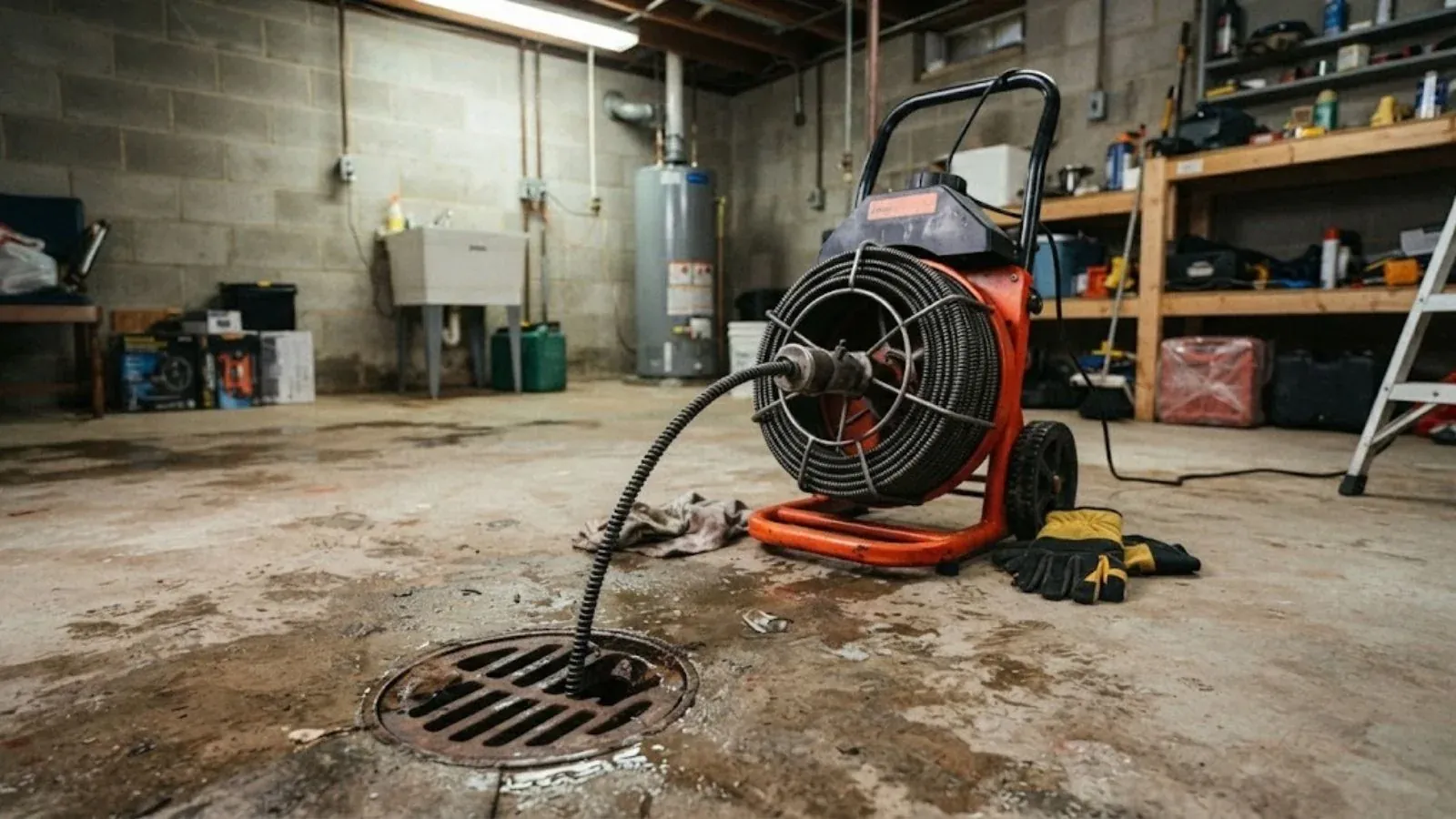
The clearing is only half the job. A good visit confirms that air moves freely, that fixtures drain quietly and that the problem is not a drain blockage that only looks like a vent issue. That second question is why drain cleaning often comes next when a vent is clear but a fixture still runs slowly.
When it is not the vent at all
A clogged vent produces gurgling, but so does a partial blockage in the sewer line. If several fixtures back up, or water appears in the lowest drain in the house, the line itself may be the problem. A cable and camera look at the main drain, which falls under sewer line cleaning, answers that question.
Roots and grease can also narrow a pipe long before it plugs completely. A drain that just gets a little slower every month is trying to tell you something.
What affects the cost of clearing a vent
Vent work is priced by access and method, not by a single flat fee.
A single-story low-slope roof is quicker than a steep or two-story one that needs more setup.
Many homes have more than one stack, and each blocked vent adds time.
Leaves are easy, while a nest, a hardened plug or a collapsed pipe takes longer.
If the drain line is also restricted, the work includes both.
Policies differ. Many cover sudden and accidental damage but not gradual wear or a clog that built up over time. If a backup damaged your flooring, photograph it before cleanup and ask your insurer what applies.
Call (855) 575-2890 for a clear price before work starts on your vent and drains.
American Canyon note: do not wash roof debris into the gutter
After a vent is cleared, leaves and nest material end up on the roof or ground. In American Canyon, only rain belongs in the storm drain, and putting leaves in gutters or inlets violates Municipal Code 14.28. Storm drains flow untreated to local creeks, then the Napa River and San Francisco Bay.
So bag the debris and put it in the trash. Public Works vacuums storm drain inlets before the wet season, but that does not cover what you wash into them. Questions go to Environmental Services at (707) 647-5325.
Source type: City of American Canyon stormwater guidance, Municipal Code 14.28.
Gurgling drains in Vallejo, Napa and Fairfield homes
The same symptoms bring calls from Vallejo, Napa and Fairfield. A vent that serves a single-story house is quick to inspect. A house with several bathrooms may have more than one stack, which is why the ground-level notes you make help us ask the right questions on the phone.
Common questions answered
We recommend against it. Reaching the vent means getting on the roof, and falls cause serious injuries. You can do the ground-level checks, note which fixtures gurgle and look from the yard. Call (855) 575-2890 and a licensed plumber will handle the roof work.
Gurgling at several fixtures, especially when another one runs, leans toward a vent. A single fixture that gurgles or stays full leans toward a drain blockage. A plumber can confirm with a cable and sometimes a camera before recommending a fix.
A trap that has lost its water seal can let sewer gas into the room. A blocked vent is one cause because it can pull water out of the trap. A dry, unused drain is another. Run the water for a minute. If the smell returns, call for an inspection.
No. Chemicals do not clear a vent, and they can damage pipes or hurt anyone working on the drain after you. If you already poured one in, tell the plumber which product it was.
Sometimes, if the vent was the only restriction. If the drain is also partly blocked, it will stay slow until the line is cleaned. That is why a good visit checks both the vent and the drain.
Bag it and put it in the trash. Municipal Code 14.28 says leaves in gutters or storm inlets are a violation, since storm drains flow untreated to local creeks and the Napa River. Environmental Services can answer questions at (707) 647-5325.
Want a plumber to look at it?
(855) 575-2890About this guide. Source note: the City of American Canyon Municipal Code, section 14.12.090, requires a city permit to install, alter or repair a public sewer, side sewer or building lateral, so ask the city before digging. Plumbing work itself follows the California Plumbing Code (Title 24, Part 5), the state standard.