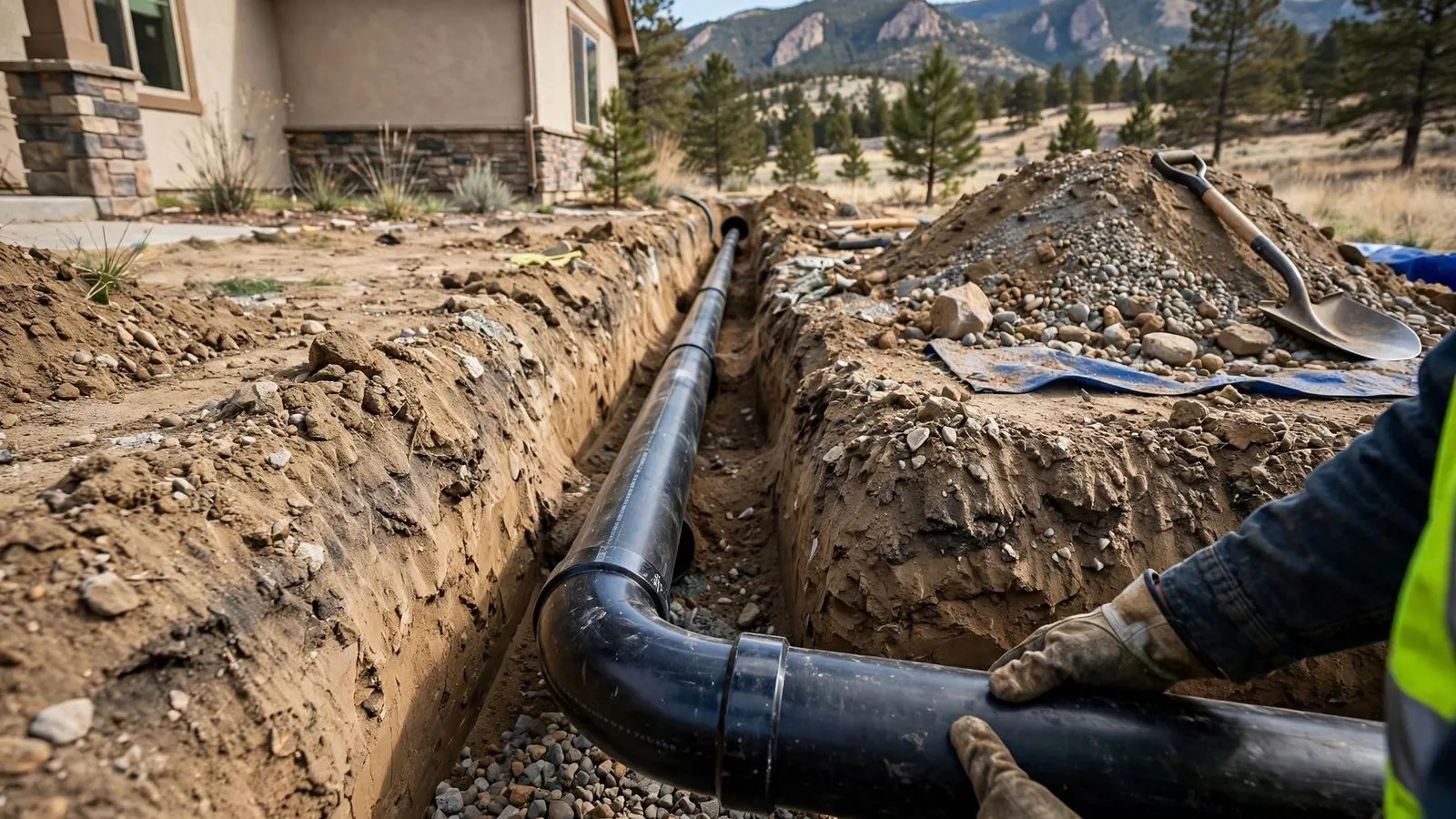
Repairing a Broken Sewer Line Under the Slab: Your Four Options
A cracked sewer pipe under a concrete slab can be fixed by spot repair, tunneling, rerouting, or lining.
A broken sewer line under a slab is repaired in one of four ways. The crew can break the floor above the damage, tunnel under the slab to reach the pipe, reroute the drain around the old path, or line the old pipe from the inside. Which one fits depends on where the break is, how bad the pipe is, and what sits above it. A camera inspection comes before any of them.
This page walks through each option in plain terms, how to pick, and what to do in the meantime. For the repair itself, see sewer line repair. For the camera work that tells you what you are dealing with, see sewer inspection. Not every home has a slab foundation, so confirm yours before you plan around any of this.
Signs the break may be below the floor
Under-slab breaks hide well, so the clues come from how the house behaves. A single fixture that backs up is usually a clog. Several fixtures that back up together point to the main line.
The more telling signs are sewage smell in a room with no drain nearby, a damp or sunken patch in the floor, cracks that appear after a leak, and a drain that clears briefly and then slows again.
- Toilets gurgle when the washer drains.
- Drains on the lowest level back up first.
- A musty or sewer smell inside the house with no visible source.
- Cleaning clears the line, but only for a short time.
Step one is proof, not digging
Never open a floor on a guess. A camera run through the cleanout shows where the pipe is cracked, collapsed, or offset, and how far from the cleanout it sits. That distance is what lets the crew pick the least disruptive route.
Also expect a locating step. A transmitter on the camera head lets the plumber mark the spot on the floor from above. Marking the exact location reduces how much concrete is cut.
Not sure which case applies to your home? Call (855) 575-2890 and describe what you see.
(855) 575-2890Side by side: which fix suits which situation
Use this table as a starting point, then confirm with the camera findings.
| Option | Best when | Trade-off |
|---|---|---|
| Spot repair through the slab | One short damaged section, clear access above | Concrete is cut and patched, and floors need refinishing |
| Tunneling under the slab | Damage sits below a floor you want left in place | Needs room outside to dig and takes skill, so it is not for every site |
| Reroute the line | The old pipe is badly collapsed or has several breaks | New path may go through walls or a crawl space, and needs a permit |
| Pipe lining from inside | Pipe is cracked but still holds its shape | Cannot fix a full collapse or badly sagging section |
| Wait and monitor | Minor defect with no symptoms | Problems may grow, and a recheck is needed |
A plumber may suggest more than one option for a single house. Ask for the pros and cons of each.
Spot repair: opening the floor above the break
This is the classic fix. The crew cuts a rectangle in the concrete over the break, digs down to the pipe, replaces the damaged piece, and then backfills and patches. It is direct and fixes the actual problem.
The cost is the mess. Flooring comes up, dust and noise follow, and you may need to move out of that part of the house for a while. Refinishing the floor is a separate job from plumbing.
Tunneling and rerouting
A tunnel repair goes in from outside the footprint. The crew digs a pit in the yard or crawl space and works toward the damaged section under the slab. It leaves the floor intact, which helps when tile or hardwood sits above the pipe.
Rerouting abandons the damaged run and builds a new path, often outside the slab. It suits a pipe that is failing in several places. The tradeoff is a bigger project and a permit, because new sewer work is covered by the same city rule as repairs.
Lining the pipe from inside
Lining pushes a resin-soaked sleeve into the old pipe and cures it to form a new pipe inside the old one. It needs little digging, which makes it appealing under a slab.
It does not suit every pipe. If the line has collapsed, has sags that hold water, or has a sharp offset, lining cannot straighten it. The camera findings decide, and an honest plumber will say when lining is the wrong tool.
What to do while you are waiting on the repair
Limit water use
Skip the dishwasher, laundry, and long showers if drains are slow or backing up.
Keep people away from sewage
Wastewater carries germs. Keep children and pets out, and wear gloves if you must touch anything.
Photograph damage
Take photos of wet floors and stains before cleanup, for your insurer.
Do not pour chemicals
Drain chemicals do not fix a broken pipe and can harm the plumber who opens the line.
Call us
We dispatch a licensed plumber 24/7. You get a clear price before work starts.
What shapes the price of a slab sewer repair
Depth and length are the first factors. A shallow short repair is simpler than a long deep one. Surface matters too, because tile, stamped concrete, and finished flooring cost more to restore than a bare garage floor.
The method changes the price as well. Spot repairs, tunneling, rerouting, and lining all use different labor and materials. Permit fees and any city inspection add to the total.
Insurance may help if damage was sudden, but many policies do not cover wear or slow root damage. Ask your insurer first.
A note for neighbors in other towns
Homeowners in Vallejo often deal with older lines near downtown, where Victorian and Craftsman homes remain. In Fairfield, where much of the housing dates from the 1960s onward, a sewer from that era may be reaching an age where roots and joint wear show up.
These are general patterns. We do not state pipe materials by neighborhood. The camera tells you what your own line looks like, and that beats any guess about the street.
American Canyon note: get the permit question answered first
Section 14.12.090 of the American Canyon Municipal Code requires a city permit, with fees paid, before anyone installs, alters, or repairs a public sewer, side sewer, or building lateral. A broken line under a slab usually means one of those, so the permit question comes before the shovel.
The code does not say who owns which part of the lateral. Ask the City of American Canyon at (707) 647-4360 before you dig, and ask what inspections apply. That answer can change who pays and who can pull the permit.
Source type: American Canyon Municipal Code Title 14, section 14.12.090.
Common questions answered
Several fixtures backing up together, a sewer smell, and a damp or sunken floor patch are common clues. A camera inspection confirms it and shows the location. Do not rely on symptoms alone, because a deep clog can look the same.
It depends on the pipe. Lining works on a cracked pipe that keeps its shape. It does not fix a collapsed or badly sagging line. Ask your plumber to show the camera footage and explain why one method suits the damage better.
Not usually. A locating step marks the break, so only a section is opened for a spot repair. Tunneling and lining can leave the floor in place. The camera findings decide which choice is realistic.
Often, but it depends on the method and how long the line is out of service. Spot repairs disturb the work area, and you may have limited water use for a time. Ask the plumber about the plan for bathrooms and laundry.
Policies differ. Many cover sudden and accidental damage but not wear, aging, or slow root growth. Ask your insurer before work starts, and photograph visible damage before cleanup. Some policies need an add-on for sewer lines.
Section 14.12.090 of the municipal code requires a city permit, with fees, before installing, altering, or repairing a public sewer, side sewer, or building lateral. Ask the City of American Canyon building division what applies to your address before any digging begins.
Want a plumber to look at it?
(855) 575-2890About this guide. Source note: the City of American Canyon Municipal Code, section 14.12.090, requires a city permit to install, alter or repair a public sewer, side sewer or building lateral, so ask the city before digging. Plumbing work itself follows the California Plumbing Code (Title 24, Part 5), the state standard.